


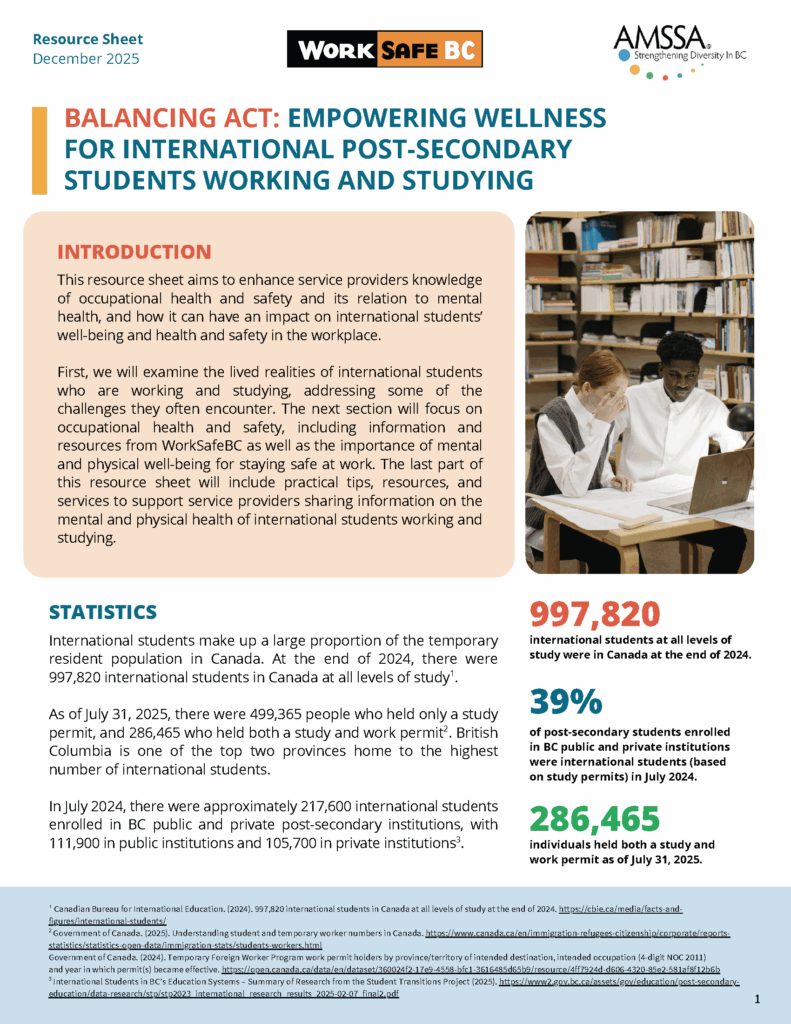
International students who are working and studying are often overburdened by the pressures of managing multiple responsibilities, while finding time for rest and balance between these various roles. When

Fatigue in the Workplace: What is it and what can you do about it?
Fatigue is the state of feeling very tired, exhausted, or drowsy. In the workplace, it can show up as reduced
Settlement Workers in Schools (SWIS) Contact List
There is no excerpt because this is a protected post.

Building Mental Health Capacity: Tools for Frontline Workers Supporting Refugee Claimants Module 3: Creating Safer Spaces and Responding to Disclosures
In response to ongoing interest from service providers in building skills to know what to do or say when someone
E-Learning Course: WorkSafeBC Special Care Services Workshop Part 1 and 2
Workplace accidents can result in serious injury, long-term disability, or even death. In such cases, injured workers or their families
New E-learning Now Available: Introduction to Intersections of Gender-Based Violence for the BC-Yukon Settlement and Integration Sector
Gender-based Violence (GBV) is one of the most pervasive forms of violence impacting people around the world, with certain populations

Info Sheet: The Colder Months Ahead: Staying Safe on the Job in the Face of Fall and Winter Weather
Following the release of the info sheet Keeping It Cool, Keeping It Safe: Ensuring the Safety and Rights of Migrant

Building Mental Health Capacity: Tools for Frontline Workers Supporting Refugee Claimants Module 2: Boundary Setting within Ethnocultural Communities
Many frontline workers serve clients from their own communities, creating unique tensions around privacy, expectations, and emotional labour. To address
Peer Support and Collective Care for Frontline Staff in the Settlement Sector – September 29, 2025
Frontline workers in the sector can often encounter high-stress and emotionally challenging scenarios when supporting clients through their settlement journey.

Supporting Newcomer Mothers in British Columbia
Women’s migration processes and experiences are often distinct from those of men, shaped by social dynamics, caregiving roles, and intersecting
