



This booklet offers a clear and grounded introduction to relationship-building between newcomer settlement organizations, newcomers and Indigenous communities.
As a sector, we are supporting settlement on lands taken without consent. This acknowledgment is not symbolic – it is a call to action. It is a call to engage in active, sustained decolonization, not in isolation, but in partnership with Indigenous peoples. However, that partnership must be approached in a good way – one that centers Indigenous knowledge systems and resists colonial patterns of control, extraction, and tokenism. This booklet is designed to support organizations on their journey of decolonization and relationship-building. It explores the connections, barriers, and shared responsibilities that shape how relationships are formed and maintained.
Readers will receive a practical and accessible overview of the core concepts and teachings that inform decolonization work in the settlement sector, while offering concrete guidance for how to begin or deepen this journey. It examines the grief caused by colonialism, while also recognizing the possibility of hope as a deliberate act of care – something nurtured through humility, reciprocity, and sustained relational commitment.
To support readers in moving forward, the booklet clearly outlines the positions, roles, and responsibilities of Indigenous Elders and Knowledge Keepers, funders, Newcomer Settlement Organizations, and newcomers in our shared journey toward relationship-building and decolonization.
The booklets describes how Indigenous worldviews and teachings can guide us to more effectively welcome and hold newcomers arriving on these lands, and provides concrete advice for nurturing belonging in ways rooted in these principles.
The resource concludes with Calls to Action that invite funders, organizations, and individuals to shift from learning to doing, offering tangible steps for practicing relational accountability and advancing decolonization within their own spheres of influence.
This foundational resource serves as a lens for AMSSA’s ongoing journey with decolonization, grounding the organization’s work in relational accountability and shared responsibility.
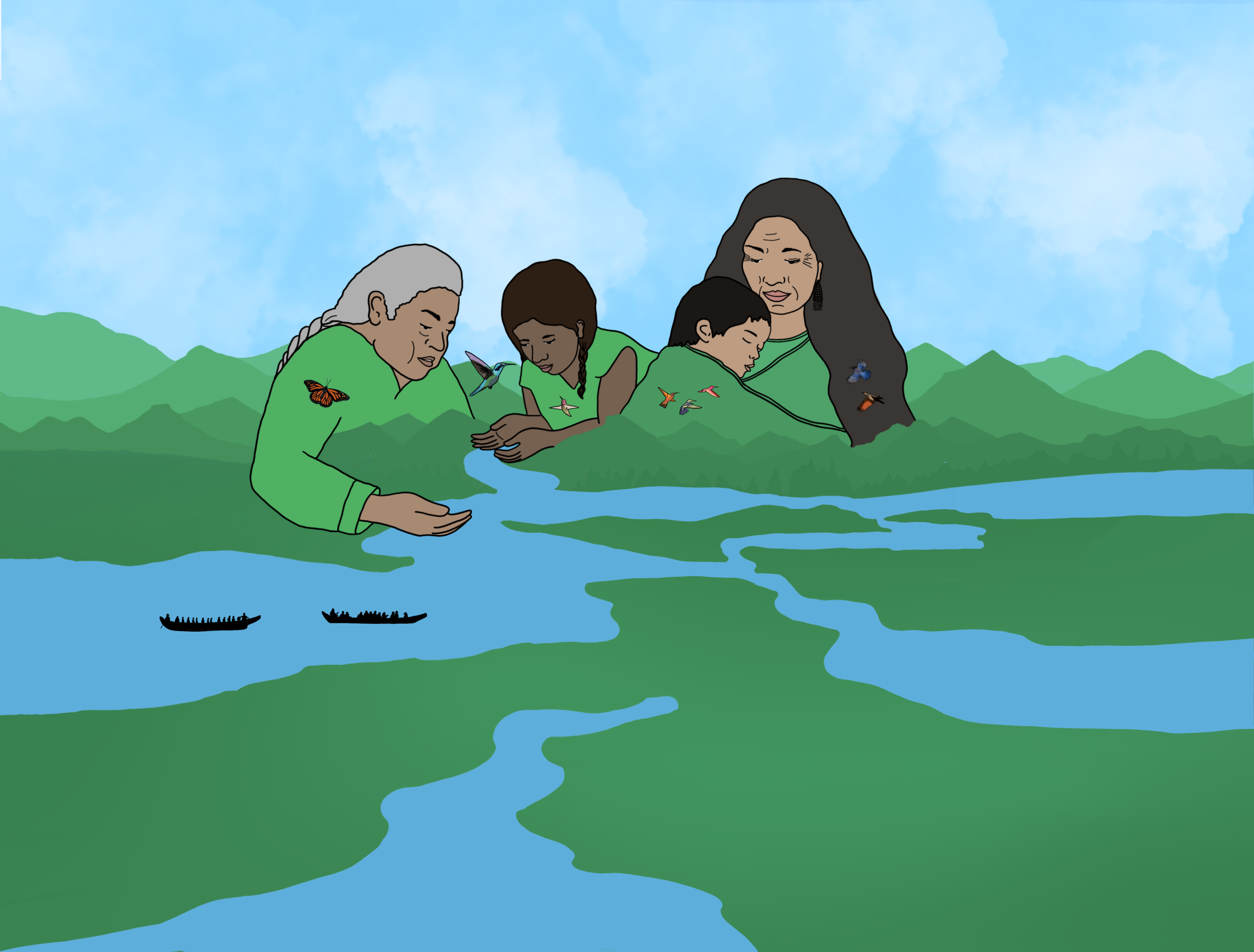
AMSSA would like to extend a deep and most genuine thanks to Elder Glida, Elder Mary, Elder Norm, and Elder Sharon for sharing their time and expertise. We thank Adriana Contreras, an artist and graphic recorder, for the beautiful imagery she created for the booklet.
If you have any questions or comments, please contact Rebecca at rferguson@amssa.org
We gratefully acknowledge the financial support of the Province of British Columbia through the Ministry of Post-Secondary Education and Future Skills.
